
Local Rank Tracking
Local rank tracking measures where your website appears in geographically specific Google results for target keywords. It helps businesses compare visibility across locations, identify ranking changes, and prioritise local SEO work using consistent, location-based data.
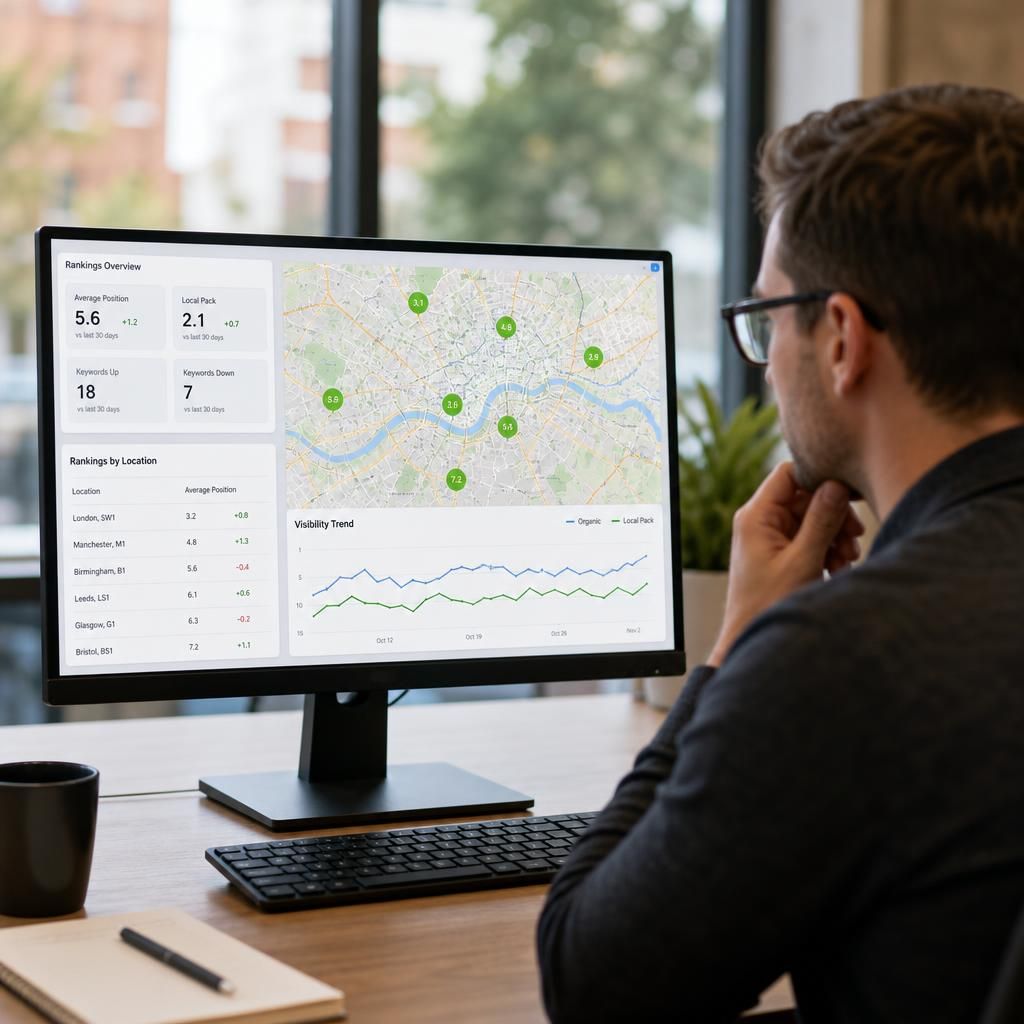
How Local Rank Tracking Works
Local rank tracking records a website’s position for a target search term at a defined location, such as a town, postcode or service area. Unlike general rank checks, it reflects the results a nearby customer is likely to see.
A local tracker checks chosen keywords from consistent geographic points and stores rankings over time. It can separate map results from organic listings, show local SERP features, and compare desktop with mobile results. Consistent settings are essential, as changing the location or device can distort trends.
Use the data to compare locations, find terms where visibility is weak, and relate ranking movement to changes on pages, business profiles or citations. Look for recurring patterns rather than reacting to one daily fluctuation. SEO System organises local keyword data into a practical view for prioritising work and reporting progress.
Local Rank Tracking Features
Local rank tracking features show where a business appears for selected keywords in specific towns, postcodes or service areas. They record organic and map visibility, check desktop and mobile results, and preserve history for assessing ranking trends.
Compare platforms by location controls, SERP coverage, reporting and data consistency; SEO System brings these checks into one practical workflow.
What to Look for in a Local Rank Tracker
Local Rank Tracking FAQs
How does local rank tracking measure search visibility?
It measures where a website appears in Google results from specified towns, postcodes, or service areas, separating organic listings from map visibility to reveal location-specific SEO performance and ranking changes.
What is the difference between local and national rank tracking?
Local rank tracking measures visibility within defined towns, postcodes, or service areas, while national tracking aggregates results across a country. Local data better reflects nearby customer experiences and geographic competition.
Can local rank tracking monitor Google Maps visibility?
Yes, it can monitor Google Maps visibility by checking local pack and map results from defined locations. This reveals presence, position, and changes separately from standard organic rankings over time.