
How accurate is Google keyword rank tracking?
Google keyword rank tracking is generally accurate when searches are measured using consistent settings, but rankings are not fixed and can vary by location, device, language, personalisation and search features. Treat tracked positions as reliable indicators of visibility and trends rather than an exact representation of every user’s search results.
Google keyword rank tracking is accurate when the search conditions, location, device, language, domain and measurement method are kept consistent. However, a tracked position is not a permanent or universal result. It represents where a page appeared for a particular search configuration at the time it was checked, so it should be used to understand visibility, direction of travel and competitive performance rather than as an exact view of every searcher’s results.
Why rankings vary
Google can show different results for the same keyword because its results are influenced by factors such as:
- Location: rankings can differ between countries, regions, towns and, for locally focused searches, nearby areas. A page may rank well nationally but appear lower for a search made in a particular local market.
- Device: mobile and desktop results can use different layouts and may produce different rankings. Mobile performance, page experience and the way content is displayed can affect visibility.
- Language and search settings: the selected language, country settings and Google domain can alter the results presented.
- Personalisation and search history: signed-in users and people with different browsing histories may see variations, although rank tracking tools generally reduce these influences by using controlled searches.
- Search features: maps, shopping results, images, videos, news, featured answers, related questions and other enhanced results can change the page layout. A traditional organic result may therefore have a different practical level of visibility even when its recorded position has not changed.
- Google testing and updates: Google continually tests layouts and changes how it evaluates and orders results. Short-term fluctuations can occur without a lasting change to the quality or relevance of a page.
- Competition and content changes: other websites can publish, update or improve content, which may affect the order of results over time.
How tracking tools measure a position
A rank tracker runs a search using defined settings, records the relevant result and reports the position of the selected page or domain. The reliability of that result depends on the consistency of those settings and on how the tool identifies organic listings within the search page.
For example, changing from desktop to mobile, from a national search to a local search, or from one country to another can create a valid but different ranking record. This does not necessarily mean that the tracking tool is inaccurate; it may be measuring a different search experience. A useful tracking setup therefore records the location, language, device, search engine and target domain for each keyword.
Tracking frequency also affects how the data should be interpreted. A single check is only a snapshot and may reflect temporary volatility, a layout test or a short-lived change in competition. Repeated measurements using the same settings provide a more dependable view of the underlying trend. Comparing like with like is essential: do not compare a local mobile result with a national desktop result and treat the difference as a ranking loss.
Why tracked rankings may differ from what you see manually
Manual searches are useful for investigating a specific result, but they are not always a consistent measurement. Your location, device, browser, account status, search history, cookies and chosen settings can all influence what appears. Google may also serve results from a different data centre or present a different search layout at the time of your check.
A rank tracker normally provides a more controlled comparison because it applies the same search parameters each time. If your manual result differs from the tracked result, first check that the keyword, country, locality, device, language and domain are identical. Also confirm whether you are comparing the same type of listing. An organic result, local result, paid placement and search feature should not be treated as interchangeable positions.
Why your tracked position may differ from Search Console data
Rank tracking and Google Search Console answer different questions. A tracker measures a controlled search for specified keywords and settings. Search Console reports data from impressions and clicks generated by real searches for your site, including variations in location, device, query wording and search context.
Search Console therefore provides an average position across the impressions included in its reporting, rather than one fixed position for every search. Its query data may also include searches that are not in your tracking list. Differences between the two sources are expected and do not automatically indicate an error. Use rank tracking for consistent keyword monitoring and Search Console for understanding the searches, impressions, click-through rate and actual search traffic associated with your site.
How search features affect perceived accuracy
A recorded organic position does not always describe how prominently a result appeared to a user. A page near the top of a result page may receive less attention when several prominent search features appear above it. Conversely, a result lower down may still attract useful traffic when the query requires a detailed answer and the listing closely matches the user’s intent.
For this reason, assess rankings alongside impressions, clicks, click-through rate, conversions and the type of search result shown. It is also useful to distinguish between a page ranking for a standard organic listing and a page appearing in a relevant enhanced result. The visibility value of a position depends on the search layout and the intent behind the query.
How to use rank data confidently
- Keep location, language, device, search engine and target domain settings consistent.
- Track a representative set of important keywords rather than relying on one query as a measure of overall performance.
- Separate branded, non-branded, local and informational searches so that different types of visibility are not blended together.
- Review trends over time instead of reacting to an isolated daily movement.
- Compare ranking changes with impressions, clicks, traffic, conversions, technical changes, content updates and known Google changes.
- Check the actual search results when investigating an unexpected movement, including the pages appearing, search features present and likely search intent.
- Confirm that the tracker is measuring the intended page, particularly where several pages on the site cover closely related subjects.
Rank tracking is most dependable as a standardised monitoring system. It can show whether visibility is improving, declining or remaining stable for a defined search audience, but it cannot reproduce every result shown to every user. When the configuration is controlled and the data is interpreted alongside other performance evidence, Google keyword rank tracking provides a sound basis for SEO decisions.
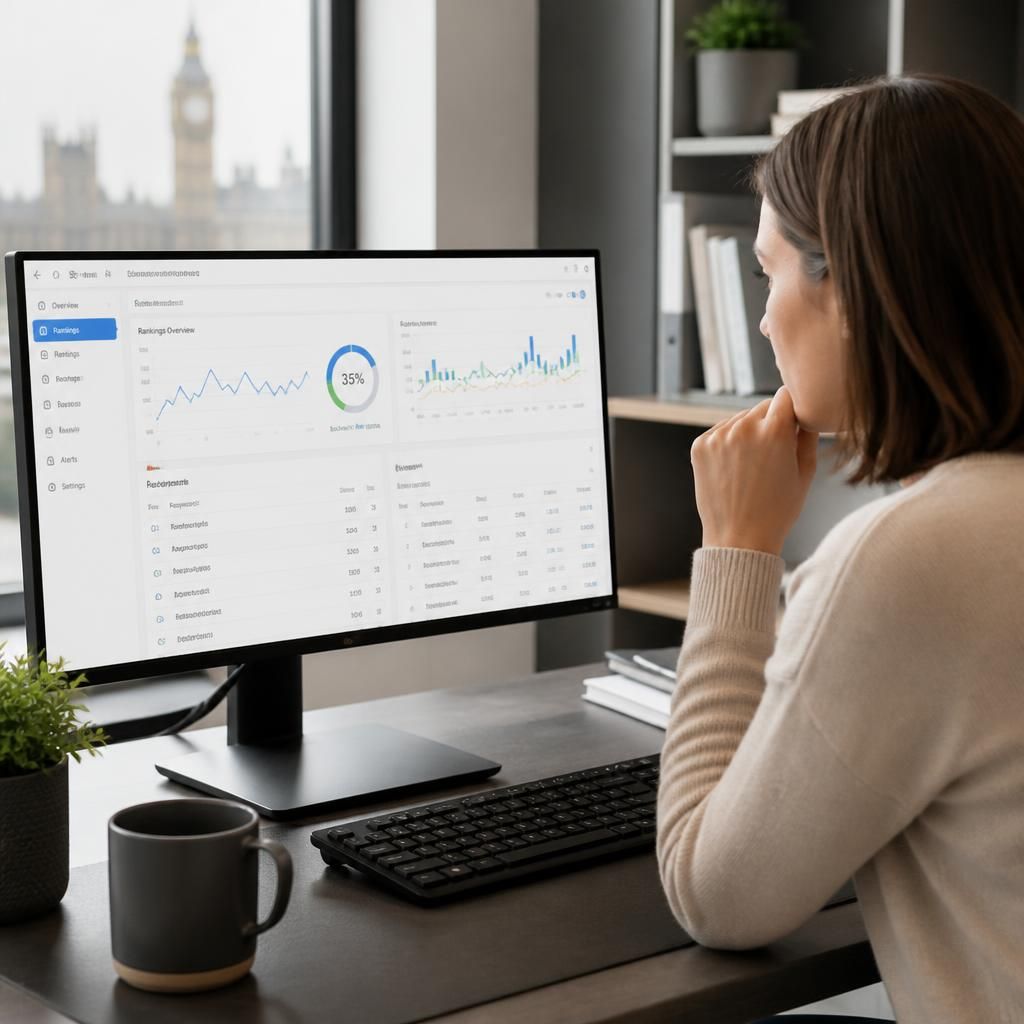
Google keyword rank tracking is most reliable when every search is measured under the same conditions. Location, device, language, search engine, target domain and keyword wording should remain consistent so that changes in the recorded position reflect genuine movement rather than a different search experience.
Manual searches can produce different results because of personalisation, search history, local settings and changing result layouts. When checking an unexpected movement, match the tracker’s settings as closely as possible and confirm that you are comparing the same organic listing. Use repeated measurements and review the trend alongside impressions, clicks and conversions rather than treating a single position as a definitive result.
Track your Google keyword rankings with confidence
Review your tracked keywords in SEO System using consistent location, device and language settings, then assess ranking trends alongside impressions, clicks and conversions. This gives you a more reliable basis for identifying changes and prioritising your next SEO actions.