
What does a local rank tracker measure?
A local rank tracker measures where your business appears for target keywords in local organic search results and the Google Map Pack, based on a specified search location and device. It can also record ranking changes over time, compare competitors’ visibility and identify which locations, keywords or listings need attention.
A local rank tracker measures where a business appears in local search results for selected keywords, locations and devices. It normally records positions in the local map pack and the standard organic results, then stores those results over time so you can assess visibility, compare locations and identify changes that require attention.
Map pack rankings
The map pack is the local results area that displays a selection of businesses alongside a map. A local rank tracker can measure whether a business appears in this area and, where applicable, the position of its listing within the results shown. This is separate from a traditional organic ranking, so a business might appear prominently in the map pack but rank lower in the organic listings, or the other way around.
Map pack results are especially sensitive to the searcher’s location. A tracker therefore uses a defined search point, such as a postcode, town or coordinate, rather than assuming that one city-wide result represents every searcher. Tracking several points can reveal how visibility changes across a service area.
Local organic rankings
Alongside map results, a tracker measures the position of the business website in the standard organic search listings for each target keyword. These rankings may include a local landing page, service page, location page or another relevant page on the site.
Recording the ranking URL is useful because it shows which page is appearing for a search. If the wrong page ranks, or several pages alternate for the same keyword, this may indicate a relevance, targeting or internal linking issue. A fall in position is more meaningful when you can also see whether the ranking page has changed.
Keyword-specific visibility
Rank tracking measures performance for the keywords included in the campaign, not for every possible search relating to the business. The selected terms might describe a service, product, location or problem that customers search for. Results can differ considerably between keywords with similar wording, so a useful campaign includes terms that represent the main services and locations being targeted.
The tracker may record the current position, the previous position and the highest or starting position for each keyword. These comparisons help distinguish a short-term movement from a sustained change. They also allow performance to be reviewed by service, location or keyword group rather than as one combined figure.
Location and search radius
A local tracker measures rankings from the search location configured for the campaign. This can be a specific address, postcode, town or grid point. Using a precise location is important because local results are influenced by proximity, and rankings can vary between neighbouring areas.
Where grid-based tracking is available, the system checks several points around a chosen area and records the result at each point. This produces a visibility pattern rather than a single ranking. It can show whether a business is strong near its premises but less visible towards the edge of its target area, or whether a competitor is more consistently visible across the region.
Device and search settings
Rankings can also be measured separately for desktop and mobile searches. The results may not be identical because the layout, location signals and available screen space differ between devices. A tracker should therefore make the selected device clear when displaying a position or comparing performance over time.
Other settings can affect the result, including the search language, country, search engine, local area and whether personalised results are excluded. Consistent settings are essential: changing the location or device between checks can make an apparent ranking change a measurement difference rather than a genuine SEO movement.
Competitor visibility
A local rank tracker can record which competing businesses appear for the same keywords and locations. This allows you to compare visibility rather than looking only at your own position. Useful comparisons include:
- how often each business appears in the map pack;
- which businesses rank for the greatest number of tracked keywords;
- how positions differ between locations;
- whether a competitor is gaining visibility for a particular service or area; and
- which searches produce no visible result for your business but do produce results for others.
Competitor tracking is a search visibility measure, not a complete assessment of another business’s marketing performance. It does not show their traffic, conversions, budget or the quality of their customer experience.
Ranking changes and trends
By checking the same keywords from the same settings at regular intervals, the tracker builds a record of ranking changes. This can show improvements, declines, volatility and longer-term trends. It may also help connect a movement with a known change, such as a new location page, an updated business profile, a change to opening information or a broader search algorithm update.
Individual daily movements should be interpreted carefully. Local results can change because of competitors’ activity, search demand, business information, review signals, proximity and changes to the results page itself. A trend across several checks, keywords and locations is generally more useful than one isolated position.
Search result features
Depending on the platform and configuration, tracking may also identify whether additional local or organic features appear for a keyword. These can include local service areas, review information, images, questions, sitelinks or other enhanced result formats. Such features affect how much attention a conventional ranking receives, so recording their presence can add context to a position.
Feature measurement varies between tracking systems. A reported ranking should therefore be read alongside the result type, the search location and the date of the check, rather than treated as a universal score.
What a local rank tracker does not measure on its own
A ranking is an indicator of search visibility, not a direct measure of business performance. Rank tracking alone does not establish how many people visited the website, contacted the business, requested a quotation or became customers. Those outcomes need to be assessed with website analytics, call tracking, enquiry records and other conversion data.
It also does not fully explain why a position changed. The tracker shows what appeared for the configured search, while diagnosis may require reviewing the relevant page, business profile, citations, reviews, technical accessibility, competitors and changes to the search results.
How to use the measurements effectively
- Choose keywords that reflect important services, products and locations rather than tracking broad terms alone.
- Set a consistent search location and record separate locations where the business serves a wider area.
- Review map pack and organic rankings independently, as they represent different areas of visibility.
- Check the ranking URL to confirm that the intended page is being shown.
- Compare results over a suitable period and across multiple locations before deciding that performance has materially changed.
- Use competitor and feature data to identify opportunities, then validate priorities against traffic and enquiries.
In practical terms, the most useful output is not a single ranking number. It is a reliable view of where the business is visible, for which searches, from which locations and on which devices, together with enough historical and competitor context to decide what to improve next.
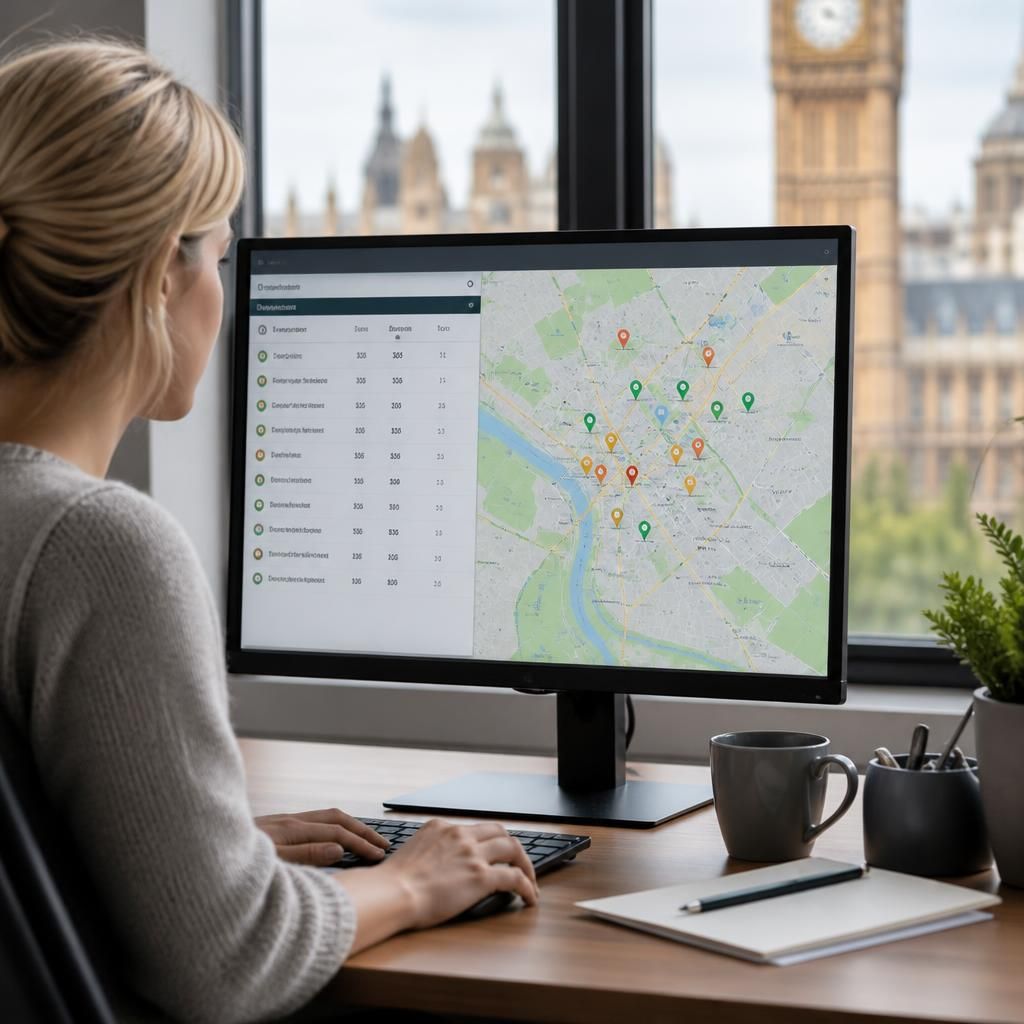
A local rank tracker measures search visibility from a defined location, rather than assigning one ranking to an entire town or service area. This matters because local results can change significantly between nearby streets, postcodes and surrounding areas.
Where grid-based tracking is available, the system checks the same keywords from multiple points around the chosen area. The results show where your business appears consistently, where visibility becomes weaker and which competitors are more prominent in specific parts of the market. Reviewing these patterns alongside map pack and organic rankings gives you a clearer basis for deciding whether to improve location pages, business information or local relevance.