
Can a local SERP tracker compare rankings across multiple service areas?
Yes. A local SERP tracker can compare rankings for the same keywords across multiple service areas, helping you identify where visibility is strong, where it is weaker, and which locations require further optimisation.
A local SERP tracker can compare rankings for the same keywords across multiple service areas by recording search results from defined locations and presenting the findings together. This shows where a business appears prominently, where visibility is weaker, and whether performance differs between nearby towns, districts or wider geographic areas.
For a meaningful comparison, use a consistent set of keywords across each service area. These might include core services, service-and-location phrases, and relevant non-location searches. Applying the same search intent makes the results easier to interpret. If each area is measured using different keywords, apparent ranking differences may reflect keyword variation rather than genuine local performance.
The tracker should also use consistent measurement settings. Search location, device type, language, search engine, domain and result type can all affect the SERP. Comparing desktop results for one area with mobile results for another, for example, can produce misleading conclusions. Where possible, record organic rankings and local pack visibility separately, because a business may perform well in one and poorly in the other.
Once locations have been configured, compare rankings by service area rather than relying only on an overall average. A combined average can conceal important differences. A business might rank strongly in its main town but have limited visibility in nearby areas, or appear in the local pack in one location while only appearing in standard organic results elsewhere. Location-level reporting makes these patterns visible.
Useful comparisons include:
- the same keyword across all tracked service areas;
- the full keyword set within one area;
- local pack visibility compared with organic rankings;
- ranking changes over time in each location;
- competitor presence and the types of pages appearing in each SERP; and
- landing page performance for different service areas.
Differences between areas can indicate several types of local SEO issue. A strong ranking near the primary business location but weaker rankings elsewhere may suggest that local relevance, authority or business prominence is concentrated in one area. If the relevant location page does not appear for searches in that area, its content, internal linking, technical accessibility or alignment with search intent may need review. Weak local pack visibility may require a separate assessment of the business profile, category selection, reviews, citations and proximity factors.
It is important not to treat tracker results as a fixed statement of what every searcher sees. Google can vary results according to precise location, device, personalisation, search history, time and the wording of the query. A tracker provides a controlled and repeatable view from the locations selected, which is useful for comparing trends, but it does not represent every possible search result within an entire service area.
For service-area businesses, define locations carefully and avoid assuming that a business will rank equally across every place it serves. Google may give greater weight to proximity and local relevance, while a well-optimised service page can support organic visibility beyond the immediate physical location. Tracking each priority area separately helps distinguish realistic local visibility from coverage that requires stronger supporting content and authority.
A practical process is to group keywords by service and intent, assign them to each priority area, apply identical tracking settings, and establish a baseline before making changes. Review rankings alongside impressions, clicks, conversions and landing-page engagement where those data are available. After content, technical or local profile work is completed, compare subsequent measurements with the baseline. This links ranking changes to specific actions without assuming that a movement in position alone represents business improvement.
Comparing multiple service areas is therefore most useful when it forms part of an ongoing local SEO review. Use the results to prioritise areas with clear visibility gaps, investigate the cause of those gaps, and assess whether improvements are consistent across the locations that matter to the business.
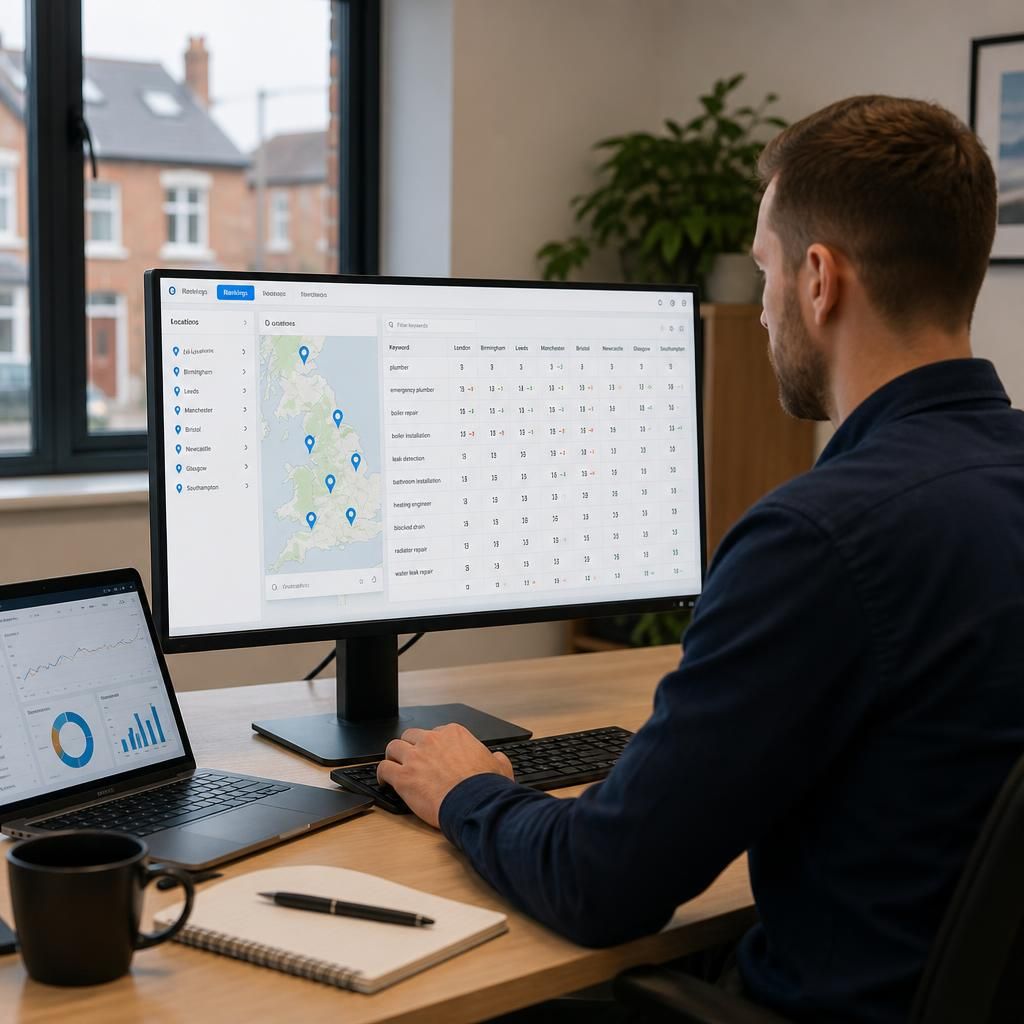
A local SERP tracker compares multiple service areas by applying the same keywords and measurement settings to searches recorded from each defined location. This creates a controlled view of how visibility differs between towns, districts or other areas served by the business.
For the comparison to be meaningful, keep the search conditions consistent. Use the same device type, language, search engine, domain and result types for every location, and separate local pack visibility from standard organic rankings. Mixing settings can make a difference between areas appear larger or smaller than it really is.
- Compare the same service and location-intent keywords across each priority area.
- Review individual rankings rather than relying only on an overall average.
- Check which landing pages appear for each area and whether they match the search intent.
- Compare local pack presence and organic rankings separately.
- Use the results alongside impressions, clicks and conversions where available.
Results represent the selected search points, not every search conducted throughout an entire service area. Reviewing the same locations over time provides a reliable way to identify visibility gaps, investigate their likely causes and assess whether local SEO changes are improving performance consistently.