
Can a SERP ranking checker track local search positions?
Yes. A SERP ranking checker can track local search positions by simulating searches from a specified location, such as a town, postcode or service area, and recording where your website appears in the organic results and local listings.
Yes. A SERP ranking checker can track local search positions by simulating searches from a defined location, such as a town, postcode, address or service area. It can record where your website appears in the local organic results and, where supported, how your business appears in local map results.
Local rankings are not identical for every searcher. Google can adjust results according to the searcher’s location, the search device, the wording of the query, the business category and other local relevance signals. A ranking checker reduces this uncertainty by using a consistent search location, allowing changes in visibility to be monitored more reliably than by searching manually from a business premises.
Local tracking commonly covers two distinct result types:
- Local organic results: the standard web listings that rank for a location-related search, such as a service page appearing for a search made in a particular town.
- Local map results: the map-based business listings shown for queries with local intent. These are often reported as a separate local pack or map ranking because their positions are calculated differently from traditional organic results.
To obtain useful local data, configure the checker with the location that reflects the area you want to assess. Depending on the tool and account setup, this may be a country, region, city, postcode or more precise point on a map. Service-area businesses may need several locations monitored, while a business serving one town may only need a representative local position.
It is also important to select the appropriate device and search language. Mobile and desktop results can differ, particularly where map features, local packs or mobile-friendly pages affect the search experience. Keep these settings consistent between checks so that changes in rankings are more likely to reflect genuine performance changes rather than a different search configuration.
Local tracking is most useful when keywords are combined with realistic geographic coverage. For example, a plumber could monitor its core service terms from the town where it is based, nearby areas it actively serves and important surrounding locations. Comparing these results can show whether visibility is concentrated around the business address or extends across the wider service area.
A location grid can provide a more detailed view than a single search point. It checks rankings from multiple nearby locations and displays how visibility changes across an area. This can reveal a strong ranking close to the business but weaker coverage further away, or identify specific areas where local optimisation and relevant landing pages may need attention.
When reviewing local ranking data, assess organic and map visibility separately. A business may rank well with its website but have limited map visibility, or appear prominently in map results while its service page performs poorly in organic listings. These outcomes require different actions. Organic improvements may involve page relevance, internal linking and technical quality, whereas map visibility is influenced by factors such as business information, category relevance, reviews, local prominence and proximity.
Local SERP data should be treated as a consistent measurement rather than an absolute view of what every person sees. Rankings can vary because of search history, device settings, location accuracy, map data changes, competitor activity and changes to the search results layout. The most reliable approach is to use the same locations and keywords over time, look for sustained patterns and compare rankings with impressions, clicks, calls, enquiries and other available business outcomes.
For the clearest reporting, record the search location, device, keyword grouping and result type alongside each ranking. Separate branded terms from non-branded service searches, and distinguish searches that include a town or area from those where local intent is inferred without an explicit place name. This makes it easier to identify whether a change affects overall visibility, a particular service or a specific geographic area.
A SERP ranking checker therefore provides a practical way to monitor local search performance without relying on manual searches from one office or home location. Configure the target areas carefully, track map and organic results independently, and interpret changes alongside other local SEO evidence to build a more accurate picture of visibility.
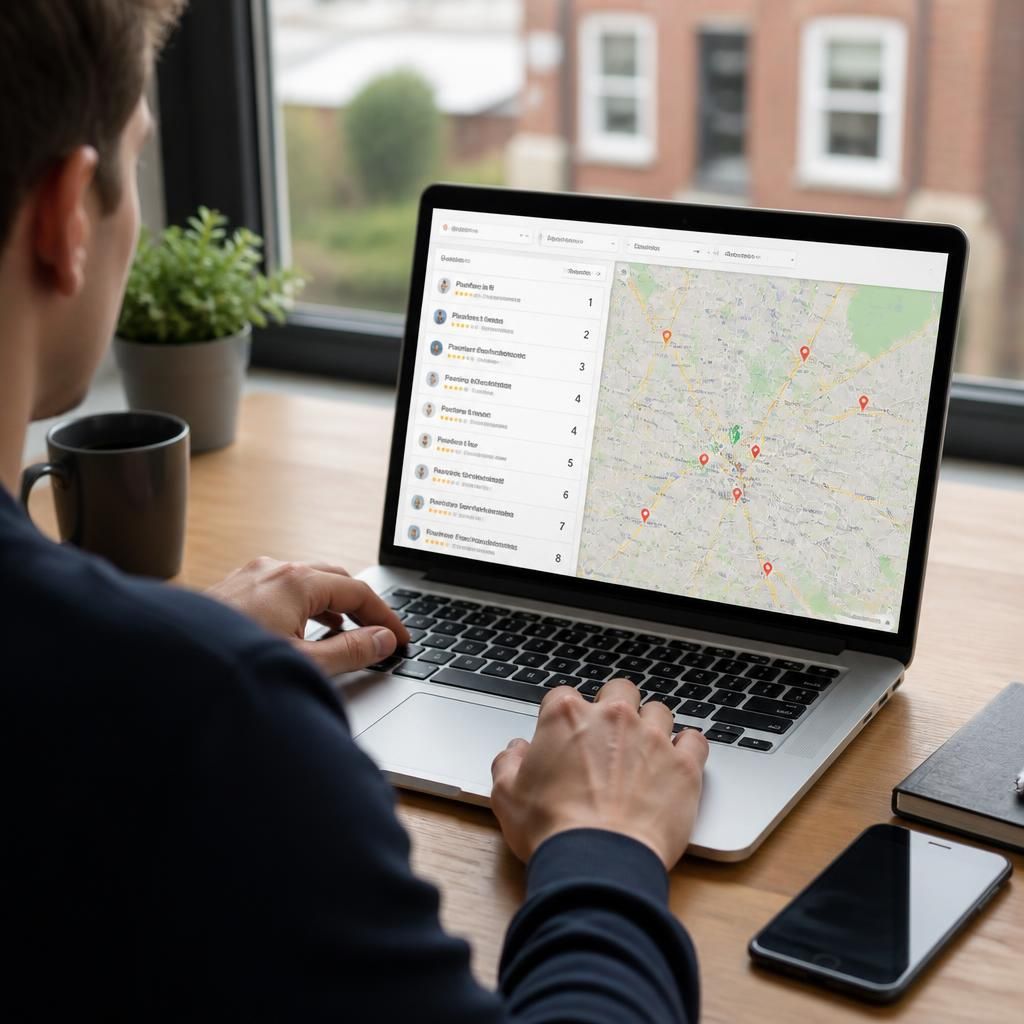
A local search position is tied to the location used for the search, so a single ranking cannot represent visibility across an entire town or service area. A location grid addresses this by checking the same keyword from multiple points and showing how rankings change across the target area.
This helps distinguish proximity from wider local visibility. A business may rank strongly near its address but appear lower in surrounding areas. Comparing grid points can highlight where location-specific landing pages, local business information, internal links or broader service-area optimisation may need attention.
For reliable comparisons, keep the keyword, device, search language and grid settings consistent between checks. Review organic and map results separately, then compare ranking patterns with impressions, clicks, calls and enquiries. A grid is most useful as a trend-monitoring tool rather than an exact prediction of what every local searcher will see.