
What does an SEO title checker assess?
An SEO title checker assesses whether a page title is clear, relevant and technically suitable for search results. It typically reviews keyword use, title length, readability, uniqueness and likely click appeal, while highlighting issues that could reduce visibility or truncate the title.
An SEO title checker assesses whether a webpage’s title is relevant, readable and technically suitable for search results. It normally reviews the wording, keyword alignment, length, likely display width, uniqueness and click appeal, then identifies issues such as truncation, vague phrasing or titles that do not match the page content.
Keyword relevance and search intent
The checker evaluates whether the title reflects the subject of the page and includes the main term or a close, natural variation where appropriate. This is not a simple test of whether a keyword has been inserted. The wording should match what the searcher is trying to find. For example, a page explaining how to assess SEO titles should have a title that signals an explanation or guide, rather than suggesting a product comparison or service page.
A useful checker may also highlight titles that contain too many terms, repeat the same phrase or use keywords unnaturally. Search engines can understand related wording, so forcing several variations into a title is generally less helpful than writing one clear description of the page.
Title length and display width
Most checkers assess whether the title is likely to fit within the available space in search results. This is often shown as an estimated pixel width rather than a simple character count because letters and symbols take up different amounts of space. A title containing wide capital letters may occupy more room than one using narrower lower-case characters, even if both contain a similar number of characters.
If a title is too long, the end may be truncated in the results. Important information, such as the page topic or differentiating detail, can then be hidden. If it is too short, it may fail to explain the page sufficiently or distinguish it from other pages on the site. The checker provides a useful warning, but its preview is an estimate rather than a guarantee: display can vary according to the device, search query and how the search engine chooses to present the result.
Clarity and readability
A title checker reviews whether the title can be understood quickly. Effective titles usually put the primary subject near the beginning, use familiar wording and avoid unnecessary punctuation, repetition and unexplained abbreviations. The title should read as a concise description, not as a list of keywords.
Readability checks may identify excessive capitalisation, awkward word order, unnecessary separators or wording that is difficult to scan. These details matter because the title is often the first description a searcher sees. A clear title also sets an accurate expectation for the content that follows.
Click appeal and accuracy
Some checkers assess whether the title gives a searcher a clear reason to choose the result. This can include checking that it communicates the page’s benefit, format or purpose where that information is genuinely relevant. Terms such as “guide”, “template”, “checklist” or “comparison” can be useful when they accurately describe the content.
Click appeal should not be confused with sensational wording. Claims that are exaggerated, vague or unsupported can attract an initial click but create a poor experience when the page does not meet the promise. The strongest title is both compelling and accurate, with the most useful distinction made clear without overstatement.
Uniqueness across the website
An SEO title checker may compare titles across a website to identify duplicates or near-duplicates. Each important page should have a title that describes its own content. Reusing the same title on several URLs makes it harder for searchers and search engines to distinguish the pages, particularly when they cover related subjects.
Similar pages may need similar wording, but their titles should still reflect their different purpose, audience, product, location or stage of the buying process. A site-wide review is more reliable than checking pages individually because duplication is a website-level issue.
Brand and page-specific information
The checker may review whether a brand name is included and whether it is placed consistently. Adding a brand can support recognition, but it should not displace the main subject when space is limited. The appropriate approach depends on the site’s naming conventions and the strength of the brand in the relevant search context.
It can also identify missing page-specific details. For example, titles for product, service, location or resource pages may need a distinguishing descriptor so that the result is immediately identifiable. These details should only be included when they add meaning and accurately reflect the page.
Technical and formatting issues
Depending on the tool, checks can include empty title fields, leading or trailing spaces, repeated separators, unusual characters and title text that appears to have been generated incorrectly. A checker may also flag titles that look like they contain a template variable that has not been replaced or a site name that has been appended repeatedly.
These checks are useful for finding implementation problems, but the title checker does not replace a crawl or technical audit. It may not confirm that the title is present in the live HTML, that it can be accessed by search engines or that a content management system has not overwritten it. Those points require a separate inspection of the page and its rendered source.
Relationship between the title and the page
The checker assesses the title itself, but the title should always be reviewed alongside the page content, heading and URL. The title tag and the visible main heading do not have to be identical. They should, however, describe the same subject and avoid creating conflicting expectations.
A well-optimised title cannot compensate for thin, inaccurate or poorly structured content. Conversely, strong content may receive less attention in search results if its title is generic or misleading. Reviewing both elements helps establish a consistent topic and intent from the search result through to the page.
What the checker cannot guarantee
An SEO title checker provides recommendations rather than a ranking prediction. It cannot guarantee a particular position, click-through rate or search result treatment. Search engines can rewrite a title when they consider another part of the page more representative of the query, and the displayed wording may vary between searches.
The checker also cannot determine every aspect of quality. It will not reliably judge whether the page fully satisfies the visitor, whether the information is factually correct or whether the title is the best choice for a particular commercial objective. These decisions require editorial and SEO judgement.
How to use the assessment in practice
- Write a concise title that accurately describes the page and reflects its primary search intent.
- Place the main subject in prominent wording, without repeating keywords or adding related terms merely for their own sake.
- Review the checker’s width or truncation warning and move the most important information towards the beginning if necessary.
- Read the title as a searcher would and remove vague, inflated or awkward wording.
- Check the wider site for duplicate and near-duplicate titles.
- Compare the title with the page content, main heading and URL to confirm that they present a consistent description.
- Inspect the live page after implementation to make sure the intended title is present and has not been replaced by a template or platform setting.
The most useful result is not a title that passes every automated warning. It is a title that clearly identifies the page, fits the available display space, distinguishes the URL from similar pages and accurately represents the content. Use the checker to find risks and omissions, then apply editorial judgement before publishing.
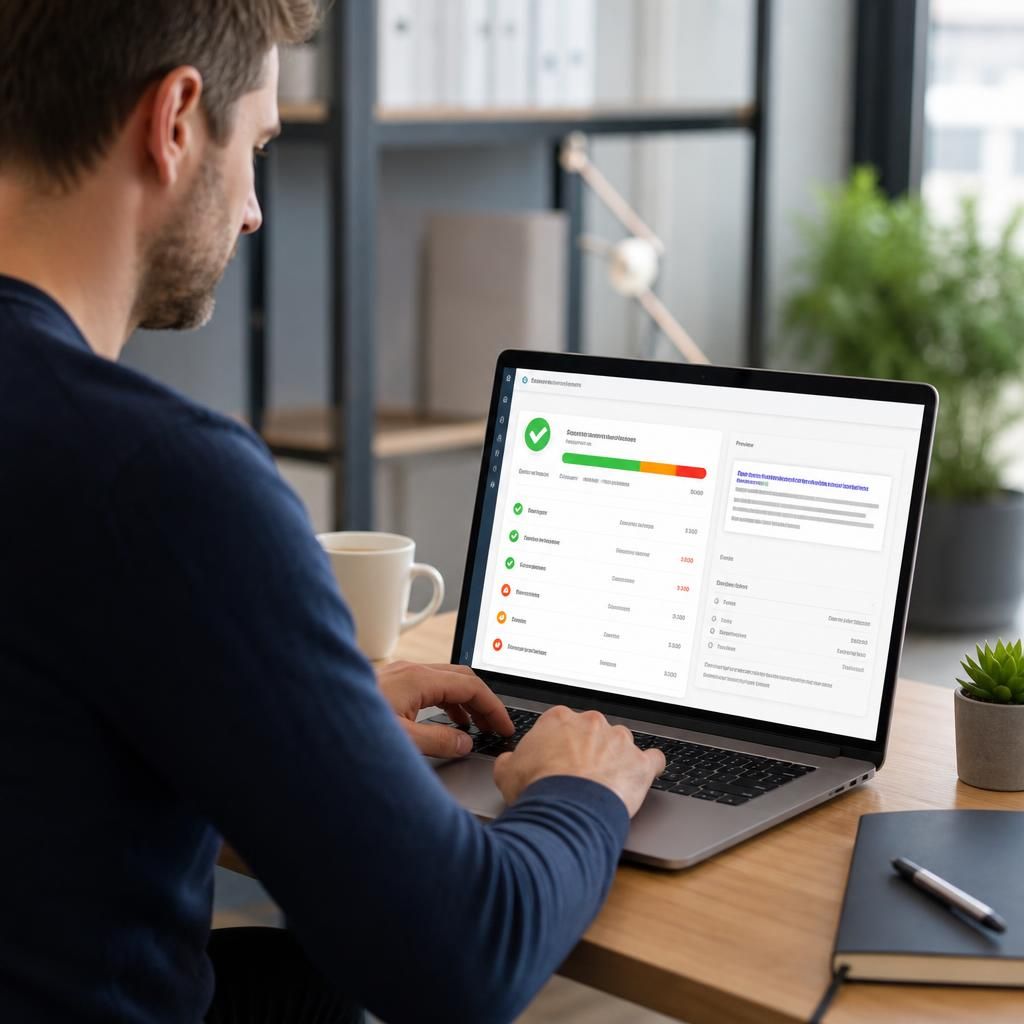
An SEO title checker assesses display width as well as the wording of a title. This matters because search results have limited horizontal space, and letters, capitalisation and symbols occupy different amounts of room. A title can therefore be truncated even when its character count appears reasonable.
Use the preview as an indication rather than a guarantee, because displayed titles can vary by device, query and search engine. Put the page’s main subject and most important distinguishing detail near the beginning, then remove repetition, unnecessary branding and vague wording. This helps preserve the meaning of the title if its ending is shortened.